



Why the Corporate World Is Ready for a Digital IP Department
Every large company eventually faces the same question: how to protect dozens of brands, patents, and designs worldwide without drowning in chaos.
Legal teams rely on external firms, local agents, and long email threads. Deadlines live in spreadsheets, invoices arrive from multiple vendors, and nobody can say with confidence how much the company actually spends on IP protection.
This model worked ten years ago. Today, it’s a trap. Global portfolios grow faster than the teams managing them, while the cost of external legal support rises every year. And when a deadline is missed or a renewal payment fails to go through, the price is far higher than a consulting fee — it’s the loss of rights.
Corporations need a new kind of infrastructure: a Digital IP Department — one system that brings order, automation, and transparency to everything related to intellectual property.
From Legal Outsourcing to a True Operating System for IP
The idea of a Digital IP Department goes beyond “another management tool.” It’s the foundation of how a modern company handles IP — the same way ERP systems transformed finance and supply chains.
On iPNOTE, all IP operations live in one workspace: every trademark, patent, and design, every deadline, every budget.
Instead of juggling vendors and inboxes, teams work inside a single ecosystem that connects people, data, and local experts.
A corporate IP manager can see the entire picture at a glance: where filings stand, which deadlines are approaching, what renewals are due next quarter, and how much each jurisdiction costs.
The platform turns intellectual property from a black box into a transparent, measurable business process.
The Full IP Lifecycle in One Place
Imagine handling every stage of IP protection without leaving one platform.
iPNOTE covers the entire cycle — from the first novelty check to renewals and reporting:
The Full IP Lifecycle Managed in One Place
iPNOTE supports the entire IP lifecycle — from pre-filing risk analysis to renewals and analytics:
- Pre-filing and clearance – AI tools assess novelty, prior art, and jurisdictional risks before investing in applications.
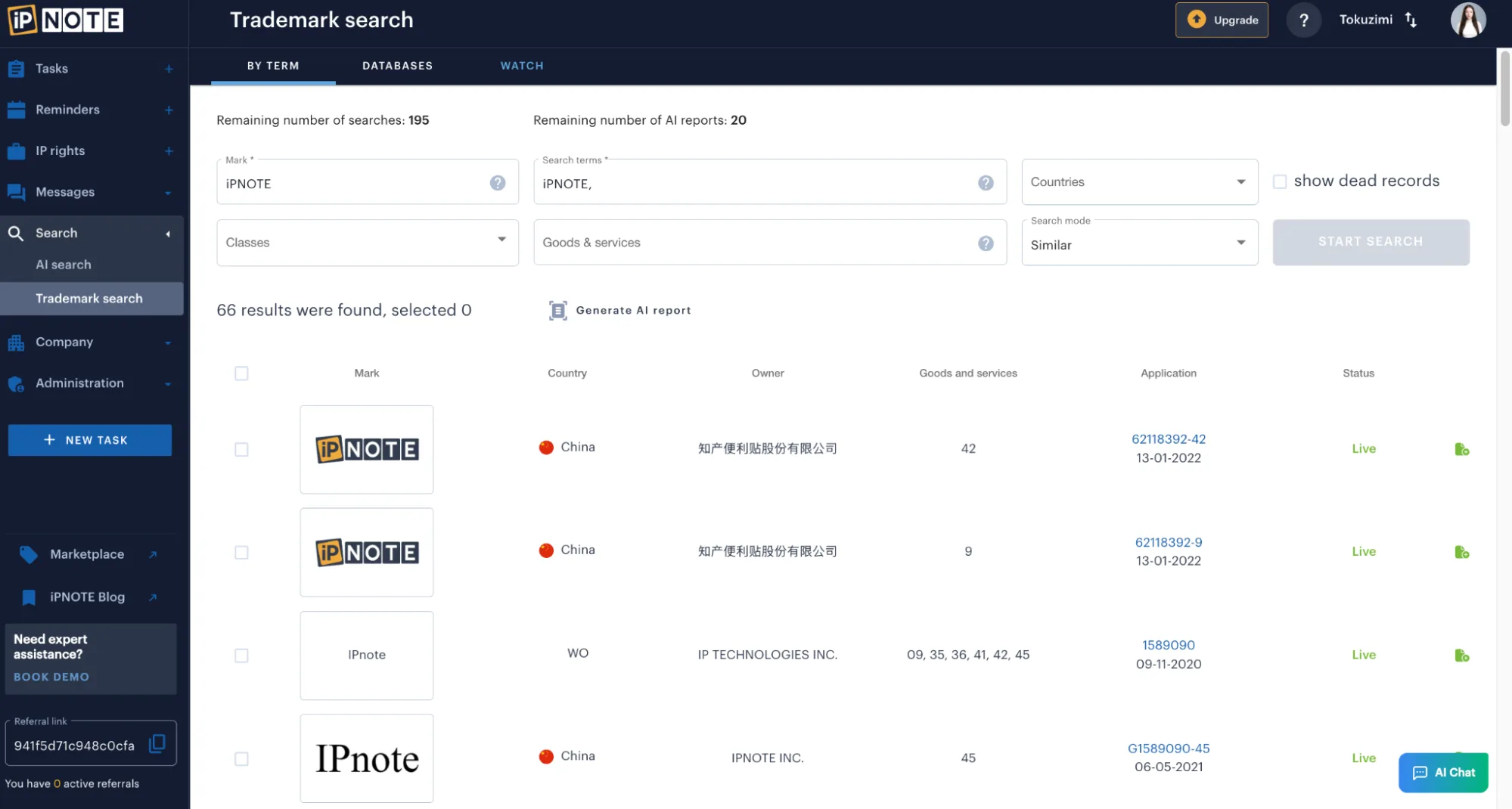
- Filing and prosecution – applications, office actions, and national phases are managed in one environment with automated deadlines.
- Oppositions and monitoring – real-time alerts track potential infringements and competitor activity.
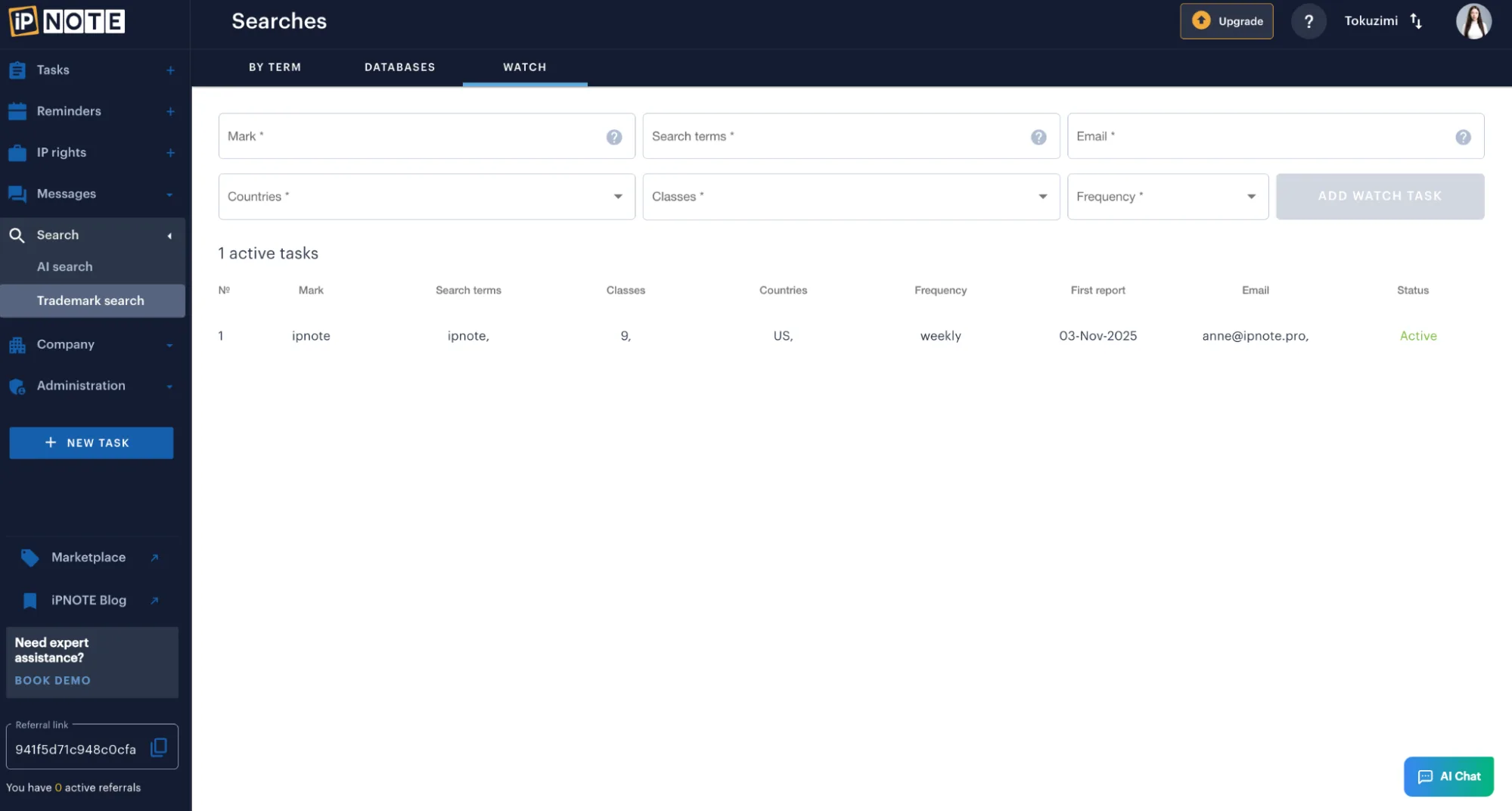
- Renewals and budgeting – plan–fact analysis, forecasting, and multi-currency financial control help prevent overspending.
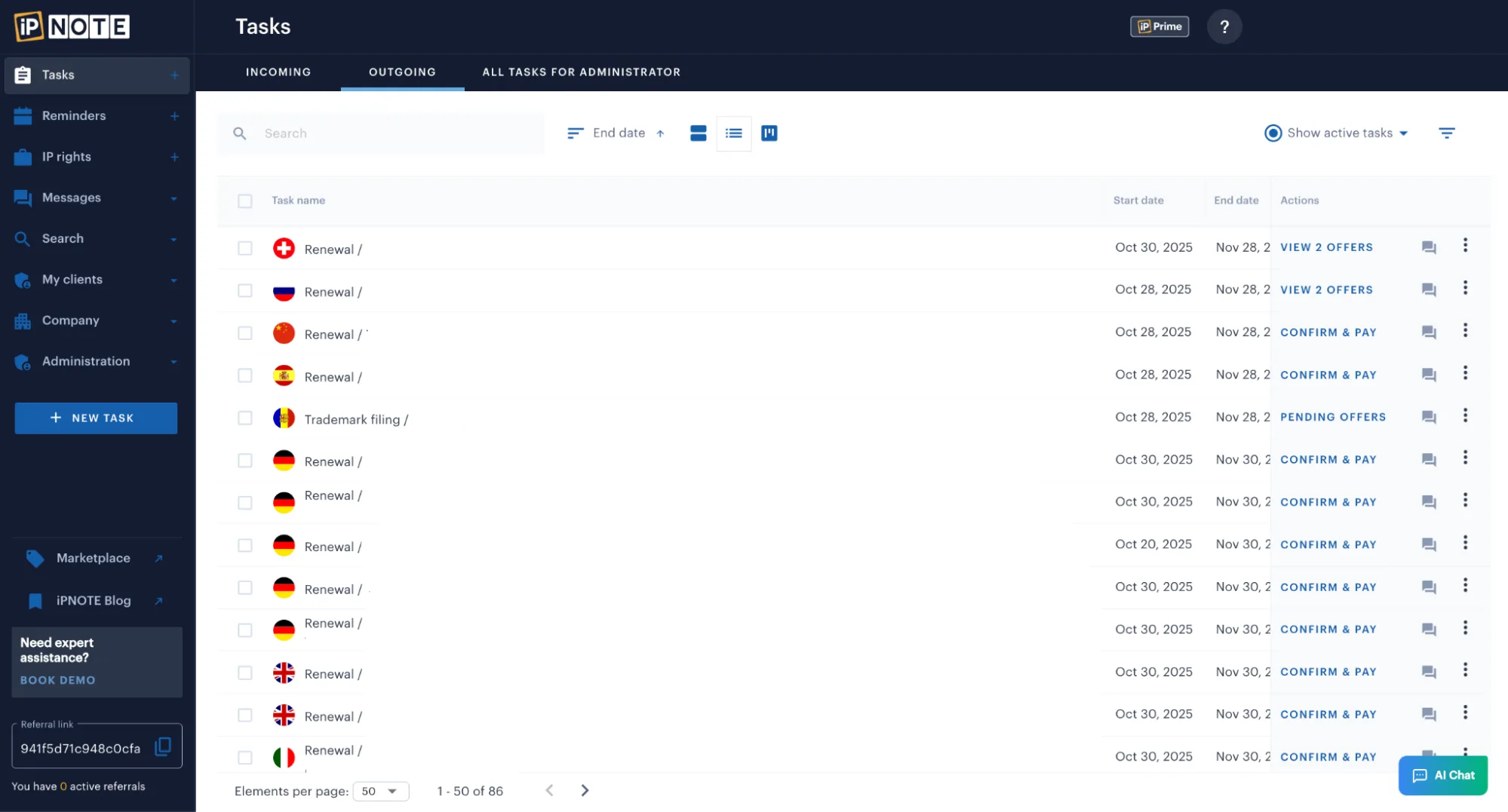
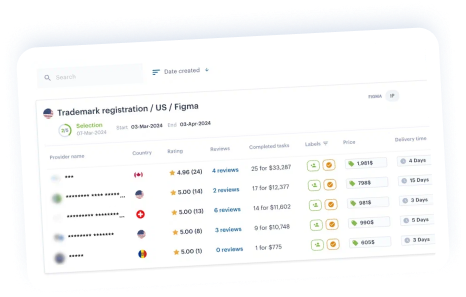
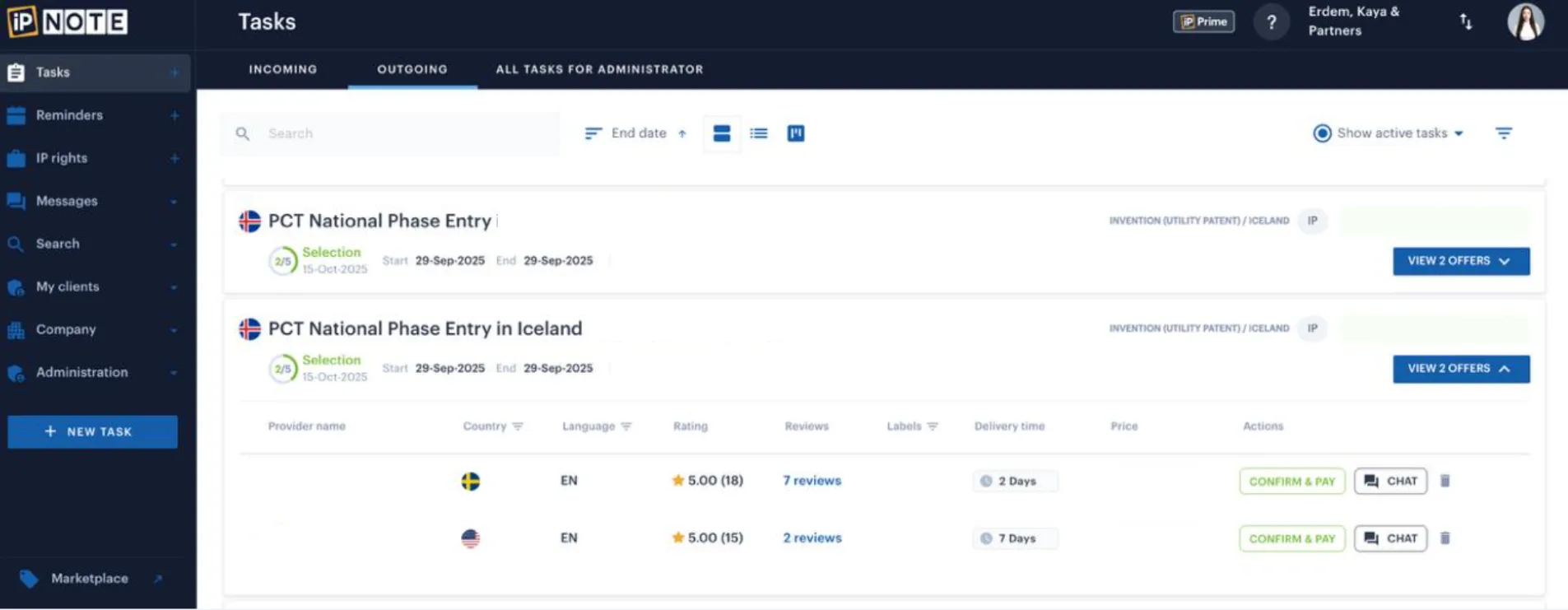
- Local execution – the marketplace connects companies with verified local attorneys, ensures SLA control, and manages payments through escrow.
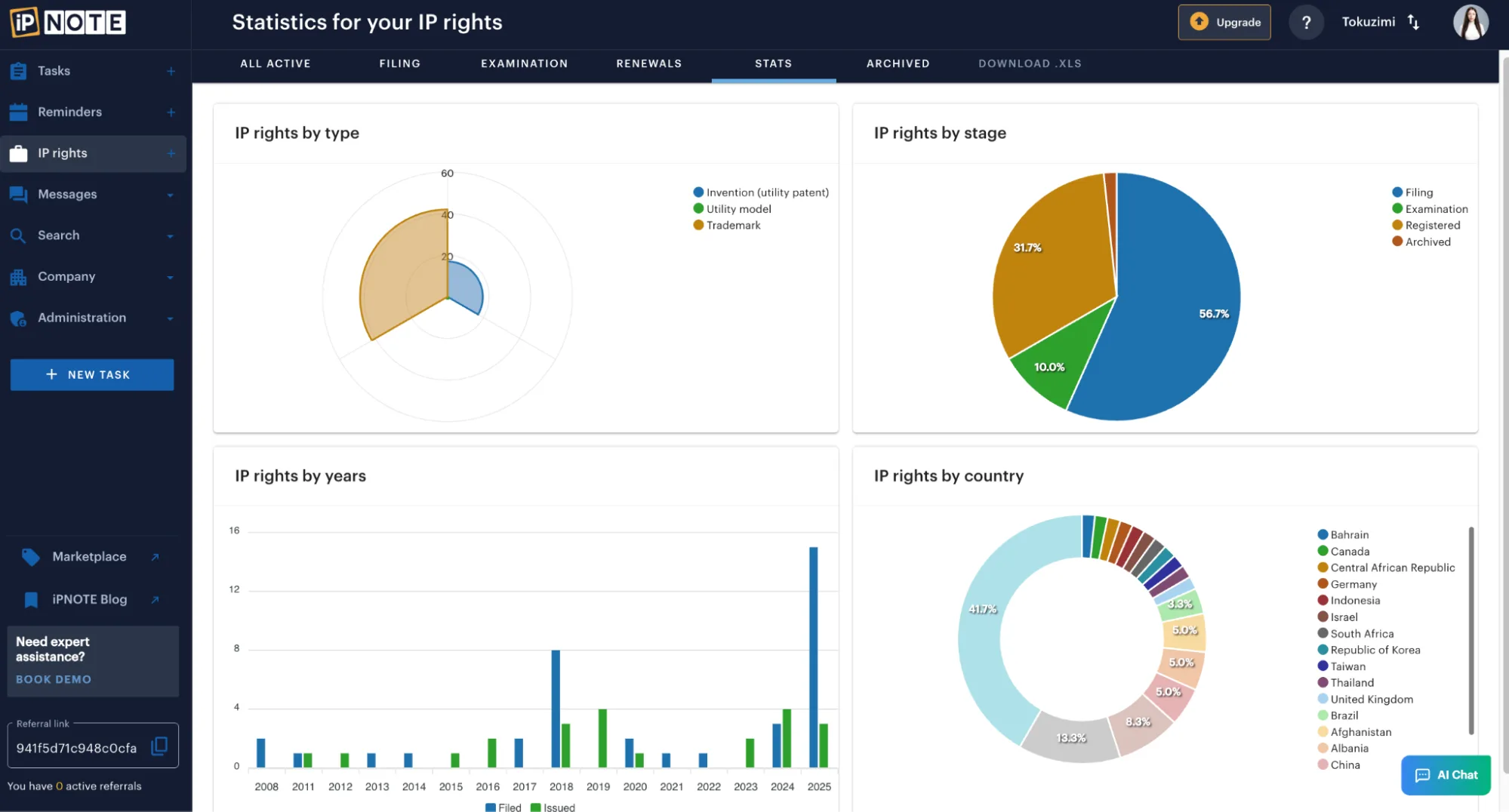
- C-level reporting – dashboards visualize portfolio status, risks, and cost efficiency across jurisdictions.
One ecosystem, one source of truth — and no more hunting through emails for critical updates.
How the Platform Replaces an External Legal Team
Corporate IP departments usually rely on a web of outside agents and consultants to handle filings, renewals, and correspondence.
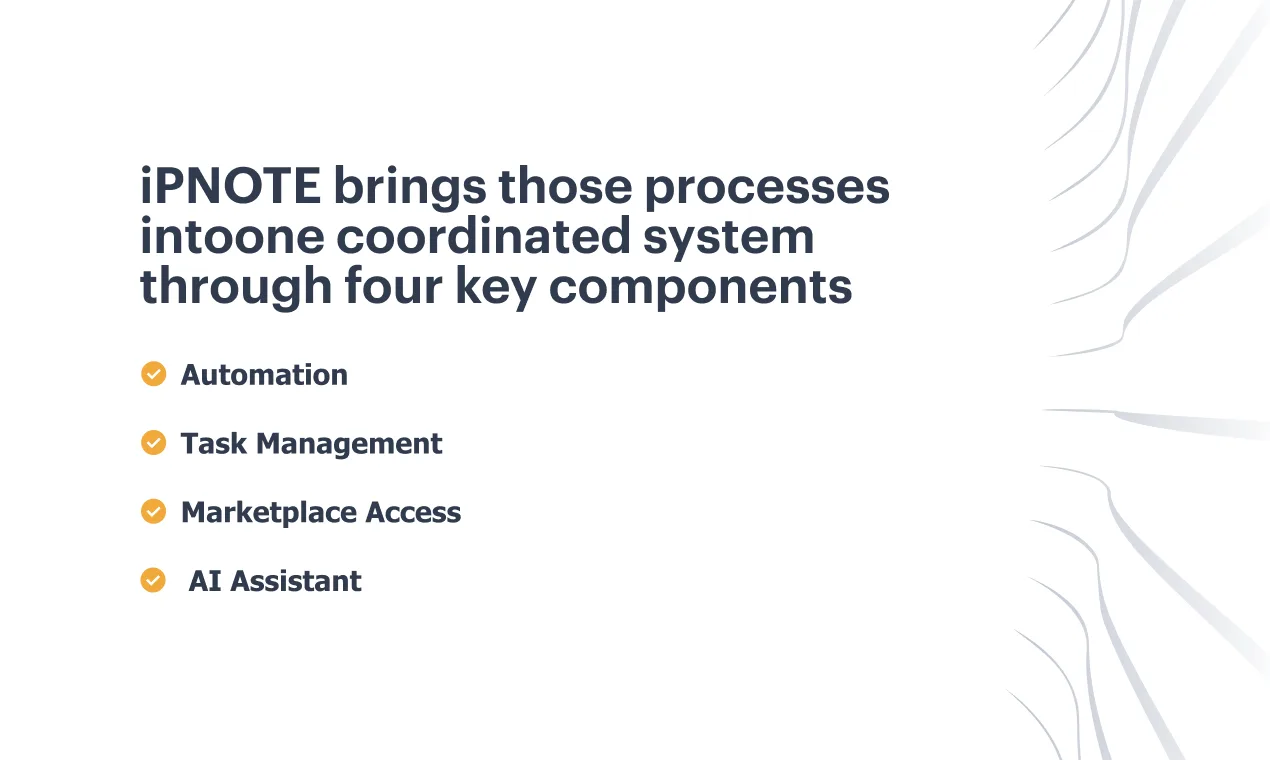
1. Automation
Jurisdiction-specific rules, automatic deadline calculations, and smart reminders eliminate manual tracking. Batch updates allow teams to process dozens of cases at once and keep calendars accurate.
Automation removes repetitive work, reduces coordination time, and nearly eliminates the risk of missed deadlines.
2. Task Management
Every action becomes a tracked task with a responsible person, timeline, and audit trail. Role-based access and SLA monitoring make accountability clear for both in-house and external teams. Managers see workloads, performance, and bottlenecks in real time, creating a culture of predictability instead of firefighting.
3. Marketplace Access
Instead of juggling multiple vendors, companies work with verified local attorneys directly inside iPNOTE.
Each request receives several fixed-rate offers, allowing transparent comparison by cost and deadline. Payments go through escrow and tasks stay linked to reports, invoices, and ratings — giving corporations full control of quality and price across jurisdictions.
4. AI Assistant
The AI assistant automates the heavy routine: summarizing office actions, extracting deadlines, and checking data accuracy.
Lawyers focus on analysis and strategy while AI handles the groundwork. The result is faster processing, fewer errors, and more time for expert-level decisions.
Economics and ROI: How to Measure the Real Value
Digital transformation in IP management is not only about convenience — it is a measurable financial decision. The easiest way to evaluate the impact of a Digital IP Department is to compare the Total Cost of Ownership (TCO) of the traditional model versus the digital one over a 12–24 month horizon.
The traditional model: agencies and manual coordination
In most corporations, the IP budget is fragmented across multiple vendors and internal labor costs.
- External agents charge per jurisdiction and often add intermediary markups for renewals and filings.
- In-house lawyers spend dozens of hours per month tracking deadlines, exchanging emails, and reconciling invoices.
- Missed renewals, re-filings, and late fees generate hidden losses that rarely appear in the budget but accumulate over time.
When these components are combined, the real cost of managing IP manually is typically 30–60% higher than what is visible in accounting reports.
The digital model: iPNOTE’s integrated platform
Under the digital model, all costs become transparent and predictable.
- Renewals, filings, and local agent work are consolidated through one system with clear rates and service-level tracking.
- Automation replaces manual coordination, reducing internal workload by up to 70%.
- AI and analytics minimize rework and prevent financial penalties tied to missed deadlines.
- Centralized billing and dashboards allow finance teams to forecast and control spending per country, business unit, or brand.
Over 12–24 months, companies that switch to iPNOTE typically see a TCO reduction of 40–50%, along with faster processing times and more accurate budgeting.
Hidden but significant gains
Beyond direct savings, digitalization creates value that the spreadsheet cannot capture:
- Shorter time-to-market — new products and brands launch faster because filings and renewals are handled without delay.
- Lower operational risk — automation ensures deadlines are met and documentation stays compliant across jurisdictions.
- Predictable budgets — CFOs can plan renewals and agent costs quarterly, without unexpected invoices.
- Data-driven decisions — analytics reveal which regions or IP types deliver the highest ROI, guiding smarter protection strategies.
Ultimately, the digital IP department converts intellectual property management from a recurring expense into a controlled investment — one that continuously pays back through efficiency, visibility, and strategic advantage.
Migration Without the Pain
Another fear of large companies is migration: “Will it take months? Will we lose data? Will operations stop?”
The answer is no.
iPNOTE offers a structured 90-day roadmap with clear milestones:
- 30 days: portfolio import and validation of deadlines.
- 60 days: connection to internal systems and activation of billing and analytics modules.
- 90 days: rollout of marketplace access and AI-assistant tools.
Throughout the process, the iPNOTE team provides full support, training, and monitoring to ensure that all internal and external stakeholders stay aligned.
From Chaos to Control
The Digital IP Department is more than a piece of software. It’s a new way to organize intellectual property management — transparent, predictable, and scalable.
With iPNOTE, corporations bring IP processes under one roof, automate routine tasks, and free their experts to focus on strategic decisions.
No more scattered vendors, missed deadlines, or budget surprises.
Instead, one digital environment that keeps innovation protected and teams confident.
To see how the transformation looks in practice, request a personal demo.
The iPNOTE team will show how your current process compares, estimate potential savings, and design a pilot tailored to your corporate structure.